If you rewind ten years, internet connectivity at events was often an afterthought. As long as the AV worked and the microphones were on, the show could go ahead without too much concern about bandwidth.
That’s no longer the case.
Today, connectivity sits right at the heart of modern event production. Whether it’s a hybrid conference, a global company town hall, a product launch being streamed to thousands of viewers, or an exhibition stand broadcasting live interviews, reliable internet connectivity is critical to making events work.
At Stream7, connectivity is something we plan from the very start of a project. It influences how events are designed, how content is delivered and how audiences engage - both in the room and online.
In this blog, we take a closer look at why connectivity has become so important and what organisers should consider when planning events.
Why connectivity matters more than ever
Events have changed dramatically in the last few years. Streaming, hybrid participation and real-time content sharing have become standard parts of many event programmes.
This means that event infrastructure now needs to support far more than just presentations and microphones.
Connectivity is often required for live streaming sessions to online audiences, remote speakers joining from around the world, audience interaction tools such as live polls and Q&A, social media broadcasting, press and media coverage, and cloud-based presentation systems.
All of these elements rely on stable, high-quality internet connections.
When connectivity isn’t reliable, the impact is immediate. Streams drop out, remote speakers disconnect, interactive platforms stop responding and audiences lose confidence in the event experience.
For organisers, this can quickly turn into a stressful situation on show day.
This is why connectivity planning should never be left until the final stages of event preparation.
Venue WiFi vs production connectivity
One of the most common misconceptions we encounter is the assumption that venue WiFi will be enough for professional event production.
In reality, venue WiFi is usually designed for general guest use - things like checking emails, browsing websites or posting on social media.
It’s rarely designed to support broadcast-quality streaming, multiple camera feeds or large-scale hybrid events.
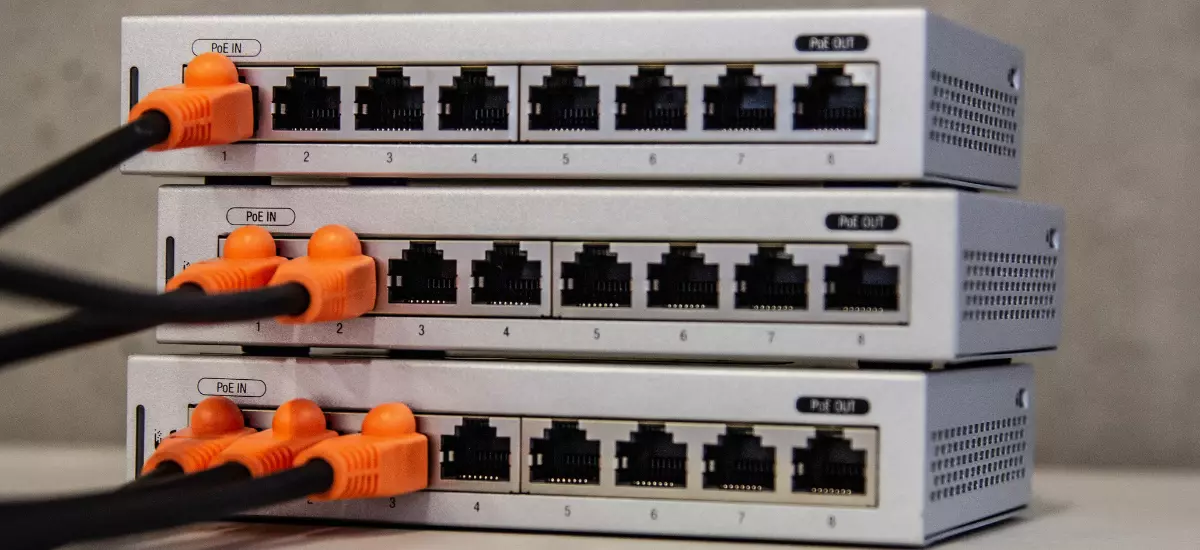
Production connectivity requires a much more robust approach. It needs dedicated bandwidth, guaranteed upload speeds and redundancy in case something fails.
This is why professional event production teams often bring their own connectivity solutions rather than relying entirely on what a venue provides.
At Stream7, we regularly deploy dedicated connectivity systems that allow us to maintain stable connections even in busy venues, exhibition halls or outdoor environments.
Planning connectivity early
One of the most important things organisers can do is consider connectivity during the venue selection and planning stages.
Technical factors such as bandwidth availability, network access points, infrastructure and signal coverage can all influence how an event is delivered.
For example, large exhibition centres can present unique challenges. Thousands of devices connected to a shared network can create congestion, which impacts streaming and broadcast reliability.
Similarly, historic venues or temporary event spaces may not have the infrastructure required for high-bandwidth production.
By addressing these factors early, production teams can design connectivity solutions that avoid problems later.
Redundancy is essential
Professional event connectivity is never built around a single connection.
Redundancy is key.
This means having backup systems ready to take over instantly if a connection fails. For example, bonded cellular technology can combine multiple mobile networks into a single stable connection.
If one network drops, the others continue carrying the signal.
Satellite connectivity is also increasingly used at events, particularly in locations where traditional infrastructure is limited.
By combining different technologies, production teams can ensure that streams remain stable and that events continue running smoothly even if conditions change.
Connectivity for live streaming and hybrid events
Connectivity is especially critical for live streaming and hybrid events.
When audiences are watching remotely, the internet connection effectively becomes the delivery channel for the entire event.
A stable connection ensures that video quality remains consistent, audio stays synchronised and viewers experience the event without interruption.
Hybrid events also require connectivity for additional features such as live chat, polling and remote audience participation.
These elements allow online viewers to feel part of the event rather than simply watching a broadcast.
Without reliable connectivity, those experiences quickly fall apart.
Content creation at events
Connectivity is also transforming the way content is created at events.
Many organisers now use events as opportunities to capture interviews, produce social media clips, stream panel discussions or record sessions for on-demand viewing.
These workflows often rely on cloud-based tools, remote editors or live distribution platforms.
For example, a panel discussion might be streamed live while short clips are simultaneously published across social channels.
All of this depends on strong, reliable internet connections.
As events increasingly become content hubs, connectivity becomes even more important.
Real-world event environments
One of the reasons connectivity planning is so important is that event environments can be unpredictable.
Exhibition halls, stadiums, historic buildings and temporary structures all present different challenges.
Signal interference, network congestion and infrastructure limitations can all affect performance.
This is why professional production teams test and monitor connectivity throughout the event.
Monitoring tools allow engineers to track bandwidth usage, signal strength and network performance in real time.
If something changes, adjustments can be made quickly to maintain stability.
Working with connectivity partners
Delivering reliable connectivity often involves collaboration between multiple partners.
Production companies, connectivity specialists and technology providers work together to build solutions tailored to each event.
At events such as International Confex, for example, we’ve demonstrated how bonded connectivity technology and broadcast production systems can work together to deliver live streams from one location to another in real time.
Partnerships between production teams and technology providers help ensure that the right tools are in place to support modern event formats.
The future of connected events
As events continue to evolve, connectivity will only become more important.
Audiences expect high-quality digital experiences alongside in-person participation. Organisers want to extend the reach of their events through streaming and on-demand content. Brands want to capture and share moments in real time.
All of this depends on stable, reliable internet connectivity.
The events that succeed will be the ones that treat connectivity as a core part of production rather than a technical add-on.
Planning it properly, building in redundancy and working with experienced teams makes all the difference.
Connectivity is key
Connectivity is now one of the most critical components of event production.
From hybrid conferences to live streamed product launches, reliable internet infrastructure enables modern events to reach wider audiences and deliver richer experiences.
When connectivity is designed properly, it becomes invisible - audiences simply enjoy the event without thinking about the technology behind it.
But behind the scenes, careful planning, robust systems and experienced production teams are working constantly to keep everything running smoothly.
At Stream7, connectivity is part of how we help clients deliver events that reach beyond the room.