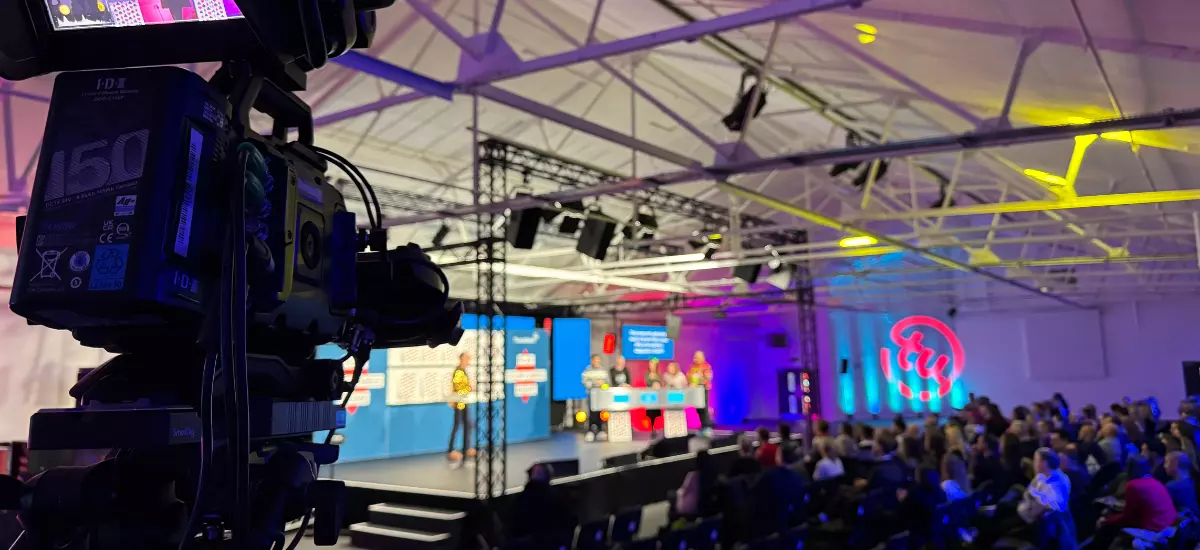
Hybrid events have evolved dramatically over the last few years. What began as a practical solution has now become a powerful event format used for conferences, internal communications, product launches and awards ceremonies.
When hybrid events are done well, they allow organisations to reach wider audiences while still maintaining the energy and connection of a live event. But creating an experience that works for both audiences takes careful planning.
If you're exploring how to deliver a successful hybrid event production, thinking about both audiences from the start can make a huge difference to the final experience.
Over the years working across hybrid conferences, meetings and exhibitions, we've seen some brilliant ideas that make hybrid events feel engaging, inclusive and genuinely designed for both in-person and online audiences.
Here are some of our favourite approaches that consistently make hybrid events work well.
Designing the stage for both the room and the camera
One of the biggest changes in hybrid events is recognising that the stage is no longer designed solely for the audience in the room. It also needs to work visually for the people watching online.
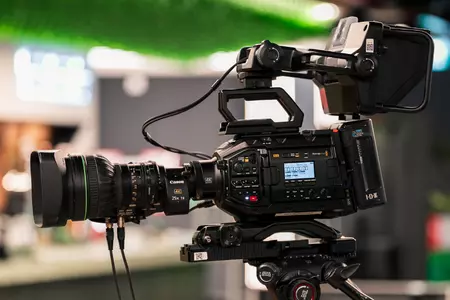
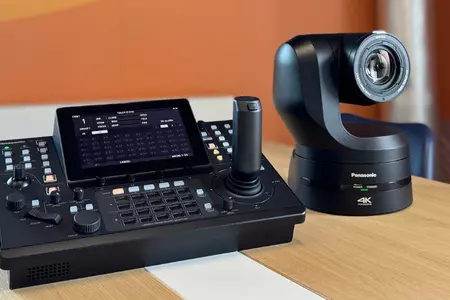
This means thinking carefully about lighting, screen placement, graphics and camera angles. A stage that looks impressive in person may not always translate well on screen if the visuals are not designed with broadcast in mind.
When the stage layout considers both audiences from the beginning, the result is a far more polished and professional experience for everyone watching.
For organisers unfamiliar with technical delivery, understanding what event production includes can help when planning hybrid events.
Remote speakers that feel like part of the event
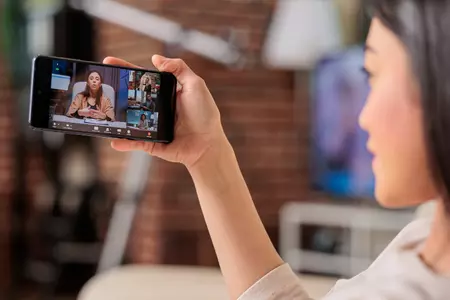
Remote speakers have become a normal part of hybrid events, but the best events make them feel like a natural part of the programme rather than a technical add-on.
Large screens, clear audio integration and thoughtful presentation layouts can ensure remote contributors feel fully involved in the event.
When this is done well, audiences often forget that the speaker is not physically in the room. The conversation flows naturally and the experience feels seamless for both audiences.
Interactive moments for both audiences
Keeping audiences engaged is always important, but it becomes even more critical when events include both in-person and online participants.
Interactive elements such as live polls, Q&A sessions and audience voting can help bring both audiences together during key moments in the programme.
When everyone participates in the same activity at the same time, it creates a shared experience that connects the two audiences rather than separating them.
Accessibility built into the event design
Hybrid events have also opened up new opportunities to make events more accessible.
Features such as live captions, flexible viewing options and sign language interpretation can make events easier for a wider range of people to attend and participate in.
Designing accessibility into the event from the beginning ensures the experience is comfortable and inclusive for everyone involved.
Creating content throughout the event
Another trend we love seeing at hybrid events is the focus on content creation.
Instead of viewing the event as a single moment, many organisers now treat it as a content opportunity. Interviews with speakers, short social clips and behind-the-scenes footage can all be captured during the event.
This approach allows organisations to extend the value of the event far beyond the day itself, creating useful content that can support marketing and communications for months afterwards.
Stream7 often supports events with both live streaming for events and content creation to help capture these moments effectively.
High production quality that feels effortless
Perhaps the most noticeable change in hybrid events is the expectation of higher production quality.
Audiences are now used to watching professionally produced content online, and the same expectations are increasingly applied to events.
Clear sound, good lighting and confident stage management all contribute to making an event feel professional and enjoyable to watch.
When production is handled well, the technology fades into the background and the audience can focus entirely on the content and speakers.
Simple hybrid event ideas that work well
For organisers planning their first hybrid event, the goal is usually simple: make the experience feel connected for both audiences.
Some of the most effective hybrid event ideas are surprisingly simple. Clear stage design, reliable streaming, strong audio quality and well-paced sessions all help create a professional experience.
Adding interactive elements such as polls, live Q&A sessions or moderated audience questions can also bring remote attendees into the conversation and make them feel more involved.
Finally, capturing content during the event - such as speaker interviews or short clips - allows the event to continue delivering value long after the live session ends.
With the right planning, hybrid events can combine the energy of in-person gatherings with the reach and flexibility of online audiences.
The best hybrid events feel natural
Ultimately, the most successful hybrid events are the ones where everything feels natural for both audiences.
When stage design, production, technology and audience engagement are planned together, the result is an event experience that works seamlessly whether people are in the room or joining remotely.
Hybrid events allow organisations to reach wider audiences, improve accessibility and create valuable content that lives far beyond the event itself.
If you're planning a hybrid event and want to explore what's possible, learn more about hybrid events with Stream7.