Reliable event WiFi is no longer a nice extra. For many conferences, exhibitions, hybrid events and live streamed productions, it is one of the most important parts of the entire event setup.
Attendees expect to be able to connect. Speakers may need internet access for presentations, video calls or live demonstrations. Event organisers often rely on registration systems, event apps, polling platforms and online Q&A tools. Behind the scenes, production teams may be managing live streams, remote contributors, cloud-based systems and content uploads.
In short, if the internet fails, it can affect the whole event.
Why Event WiFi Matters
Poor connectivity can quickly create problems for both organisers and attendees. Slow WiFi can delay registration, interrupt presentations, disrupt audience engagement tools and make it harder for people to share their experience online.
For hybrid events and live streamed events, the stakes are even higher. Your online audience is relying on a stable connection to watch, listen and interact in real time. Even a short drop in connectivity can affect the experience for viewers joining remotely.
That is why event internet should be considered early in the planning process, not added as a last-minute question once the rest of the event has already been designed.
What Is Event WiFi?
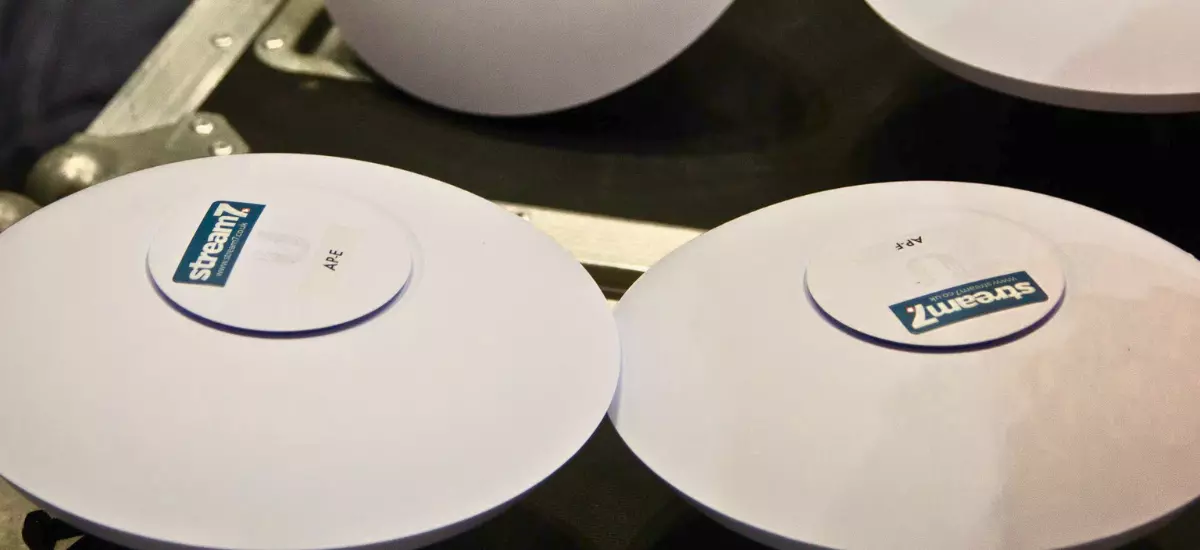
Event WiFi is the internet connection and wireless network used to support an event. It might be as simple as a venue’s existing guest WiFi, or it might involve a fully managed temporary internet solution designed specifically for the event.
The right setup depends on the size of your audience, the venue, the number of connected devices and what the internet needs to support. A small internal meeting will have very different requirements to a large conference with live streaming, exhibitors, event apps and remote speakers.
Venue WiFi
Many venues offer their own WiFi as part of the hire package. For smaller meetings, networking events or simple presentations, this may be enough.
However, venue WiFi is often shared with other users in the building. That means your event may be competing with hotel guests, other conferences, staff networks or public users. Speeds can also vary throughout the day, especially when large numbers of attendees connect at the same time.
If you are planning a corporate conference, live stream or hybrid event, it is important to ask whether the bandwidth is dedicated to your event or shared across the venue.
Dedicated Wired Internet
A dedicated wired internet connection gives your event its own connection, rather than relying on a shared public network. This is often the preferred option for more technical events, especially when reliability is critical.
Dedicated internet is particularly useful for live streaming, remote presenters, production teams, event apps and registration systems. It can provide more consistent speeds, better security and a more stable connection throughout the event.
For larger productions, we would usually recommend keeping production internet separate from attendee WiFi. This helps protect the systems that are essential to the event, while still giving delegates access to the connectivity they need.
4G and 5G Event Internet
4G and 5G connectivity can be a strong option for temporary event WiFi, especially where venue internet is limited or unavailable. It is often used for outdoor events, temporary venues, pop-up experiences, sporting events, festivals and filming locations.
The main thing to remember is that mobile connectivity depends on local coverage and network demand. A location might have excellent 5G during a site visit, but perform differently when thousands of people arrive and begin using the same mobile networks.
For that reason, 4G or 5G can be very useful, but should be planned carefully for mission-critical event services.
Bonded Internet for Events
Bonded internet combines multiple connections to create a more resilient event internet solution. This might include several 4G or 5G networks, a venue connection, dedicated broadband or satellite connectivity.
Instead of depending on one single connection, bonded internet spreads the risk. If one connection drops or becomes congested, the system can continue using the remaining connections.
This is especially useful for bonded internet for live events, where reliability is essential. It is commonly used for live streaming, broadcast production, hybrid events and remote locations where standard venue WiFi cannot be relied upon.
Satellite Internet
Satellite internet can support events in locations where traditional connectivity is difficult. It is often useful for outdoor broadcasts, rural venues, sporting events and temporary sites.
Like any connectivity option, it works best when it is planned properly. Satellite can be a valuable part of a wider event internet setup, especially when combined with bonded connectivity to add another layer of resilience.
How Much WiFi Does an Event Need?
There is no one-size-fits-all answer. The amount of bandwidth your event needs depends on how people will be using the connection.
A room of delegates checking emails needs far less capacity than an event with live streaming, video calls, exhibitors, app-based networking, audience polling and remote speakers.
It is also important to think beyond the number of attendees. Many people bring more than one connected device, such as a phone, laptop and tablet. Exhibitors may need their own connection for demos or payment systems. Production teams may need dedicated bandwidth for streaming, uploads and online systems.
The best approach is to look at your event in detail and design the connectivity around what actually needs to happen on the day.
Event WiFi for Hybrid and Virtual Events
For hybrid event production for internal communications and virtual conference production, internet reliability directly affects the audience experience.
Remote viewers need a smooth stream. Speakers joining online need to be heard and seen clearly. Event organisers may need live Q&A, voting, chat, audience analytics and on-demand recordings. All of this relies on stable connectivity.
That is why professional hybrid and virtual event production should always include a proper connectivity plan. The internet should be tested, monitored and backed up where possible.
Questions to Ask Before Choosing Event WiFi
Before relying on any event internet solution, it is worth asking a few key questions. Is the bandwidth shared or dedicated? What upload speed is available? Is there a backup connection? Who monitors the network during the event? Can the setup support live streaming, event apps, registration systems and remote speakers?
These questions help move the conversation beyond “does the venue have WiFi?” and towards “is the internet suitable for what this event actually needs?”
Choosing the Right Event WiFi Partner
Event WiFi is about more than getting people online. It supports the systems, content, communication and audience experience that make an event work.
At Stream7, we support events with professional connectivity solutions, including temporary event WiFi, bonded internet, live streaming connectivity and resilient internet setups for conferences, exhibitions, hybrid events and outdoor productions.
Our team works with organisers, venues and production partners to understand what the event needs, identify potential risks and build a connectivity solution that supports the event from start to finish.
If you are planning an event and need reliable internet, WiFi or bonded connectivity, get in touch with the Stream7 team to talk through your requirements.